Showing posts with label science stuff. Show all posts

Medical Foam

In an accident which causes internal bleeding, a simple external compression or tourniquet application simply won't be enough to increase the chance of survival for the victim. But now, thanks to the technology developed by Arsenal Medical, the chance of survival can be substantially increased.

The technology was developed by keeping in mind a wounded soldier with multiple internal hemorrhage in a battle where surgeon needed for suture is quite a distance away. The tech, which is called Arsenal Foam System is designed to control active internal bleeding by creating contact and applying pressure to wounded organ. 

Two liquids, injected to the site with internal bleeding will then form a polymer that expand rapidly and conforms to the shape of body's interior. The injury is compressed from inside the body which will slow the bleeding and greatly enhance the victim's chance for survival.


Tests performed on pigs have shown significant result where it increased the chance of survival from 8% to 72% in three hours period after the injury. After arriving at medical facility, a surgeon can then remove the foam in under a minute and suture the injury. Imagine the life that we can save from this piece of technology. 


Source: Here and here

Light Matter Conversion

This is a relatively old article but for what it's worth, this work done by Prof. Lene Vestergaard Hau from Harvard University proves that light can be changed into matter and subsequently changed back into light.

Prof. Lene Vestergaard Hau. Source: Here

They did the experiment by slowing the light pulse using a cloud of cold atom and the light, now travels at a very slow speed will made its imprint onto the cold atom. The experimenters then turned the light pulse off and tried to guide the imprint to a second cold atom cloud and surprising enough, the fingerprint can't be seen but the atom in the atom cloud were found not touching each other.

An illustration of a 'super-photon' created when physicists turned photons into a state of matter called a Bose-Einstein condensate. | Jan Klaers, University of Bonn. Source: Here

The distance between the first and second clump is only eight - thousandths of an inch apart but this can be considered a very distance gap. So when they nudge the second cloud with light pulse, then the imprint survives and is turned back to the light which has the same characteristics, shape and wavelength as it entered the first cloud.

From the first to the second clump of atom, the light change from the form of light pulse into an invincible matter wave, a clump of atom that travels through the cloud and behaving as wave. After the light beam was fired to the second clump, this matter wave turned into light pulse again and out it goes.

Well, the application of this light - matter conversion mostly will be in telecommunication as it is believed that light can carry information and it is almost tamper proof. We won't be seeing light be casually turned into matter in near future but the imagination will come true if we search hard enough for it.

Source: Here

Chronic Pain Reliever Using Mobile Devices

Technology has pretty much intrudes everything in our lives. One of the aspects is medicine. Today, the concept of incorporating medicine with technology helps a lot in saving people's lives.

A patch to relieve chronic pain in time of need. 

The image shown above is a concept brought by Thimble Bioelectronics and it is used as chronic pain reliever. Current treatment for chronic pain involves some medications (ibuprofen, aspirin, vicodin) or meditations. The patch in this concept will act as pain reliever by method of Transcutaneous Electrical Nerve Stimulation (TENS), an electrical shock uses in electric therapy to treat certain types of chronic pain.

Traditional equipment for TENS therapy. Quite scary as compared to
above picture.
Normal TENS therapy will need the use of some electrical powered machine to deliver a shock via several electrodes attached to the body. The patch, however, will function like a bandage in which the user can administer their own pain relief when needed (kinda like administering your own drug intake). It will come with Bluetooth connectivity and mobile devices with a special app tracking how the patch is used and managed. Pretty neat, huh?

Source: Here


Tesseract - A Four Dimensional Cube

In Marvel movie The Avengers, it is stated that the Tesseract contains an unimaginable power and can be used as weapon of mass destruction if the power can be unlocked. Well, the tesseract that i'm refering to is not in the movie but rather the one in field of geometry.

Tesseract from the movie The Avengers
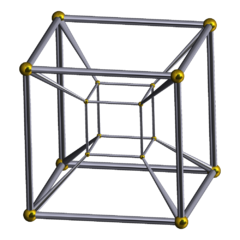
According to wikipedia, a tesseract is a four dimensional analog of the cube and sometimes is called 8-cell, regular octahoron or cubic prism. Tesseract is a four dimensional hypercube, (cube with dimension higher than 3) and first proposed by Charles Howard Hinton, a British mathematician in the 19th century. 

A tesseract image in Schlegel diagram.
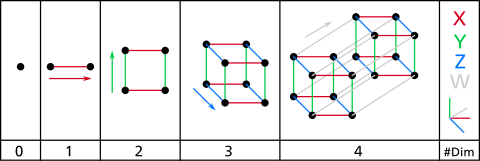
A tesseract can be unfolded into 8 cubes in 3D space, the same as a cube unfolded 6 squares in 2D surface. The image below shows how a tesseract can be build from 1 dimensional space until the first cube projection in 4 dimensional space.

How to draw a tesseract from a single point ie one dimension.

There are other types of tesseract for example truncated tesseract and rectified tesseract in which they have different Schlafli Symbol and Schlegel diagram.  The existence of higher dimension is by far an abstract concept and none have observed these higher dimensions. Nonetheless, the mathematics suggests the possibility and therefore could exist in this vast universe.


p/s: I read somewhere in which lower dimensional object couldn't possibly see the higher dimension but the higher dimensional object can definitely see the lower one. Not sure how this implicates the existence of higher deity though. 

Alchemy: Transform Metal into Gold

For the past hundred years, many scientists tried to do alchemy, in which the ultimate aim is to create a philosopher's stone, an object powerful enough to convert normal metal to gold or silver. The stone also is believed to hold the secret of immortality through elixir of life. Though not all part from alchemy is understood nowadays, it did provide a foundation for modern science and chemistry.

Nonetheless, people are still trying to find ways to create gold because after all, gold is considered high value item and represents the wealth of an individual. Unfortunately, the status may change due to recent finding at Michigan University. The finding, which is a bacteria named Cupriavidus metalliduransc (right?) is found to be able to produce gold nugget through microbial processes.

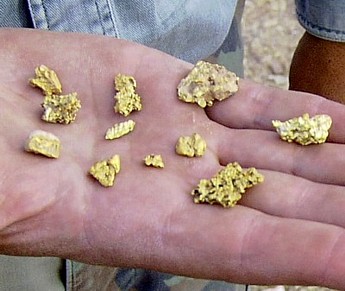
"Gold nugget" after the microbial alchemy

Well, the amount, as you can see from the picture is not much compare to the gold that you'll find in nature but with more research, the capability to turn something into gold, though amazing, may bring impact to world's economy.
Gold nugget found in nature

The researchers presented their finding as an art project called The Great Work of Metal Lover by using a portable lab house where the bacterium performs the "microbial alchemy" thingy. And luckily, the researchers said that replicating the bacterium's actions on a larger scale would be impractical and cost prohibitive.

Source: here

Earth Natural Music

Dawn chorus refers to a phenomena that occurs during sunrise and with proper but unsophisticated equipment, you can hear a music played by the Earth.


The music is believed to be generated by interaction between high energy electrons that trapped in the Earth's magnetosphere and electromagnetic field from solar wind. Well, ignore the scientific jargon for now, chill and listen to the song of the earth.

P/s: I'm not grasping the how this music is created just yet. But you are welcome to read about it here and here.


Source: Here.

Thorium Future

As world energy demand increases, there are talks about alternative energy being not enough to support the depleting fossil fuel. However, new discovery (well, relatively new) has been made and with the subject of nuclear fusion/fission to generate energy, Thorium, is said to hold the key.

Below is a good infographic about Thorium and its properties that enable it to become the future in providing the world's energy need. 


Source: here

Thought Control Quadrotor

Since the discovery of brainwave by Hans Berger, neurologist from Germany, more advance applications are made to utilize the brain function, which includes using brain to give instructions to physical object. The video below shows several experiments done by researchers at Zhejiang University, China regarding thought control. 


If the explanation isn't clear, here's a sort of what the lady said in the beginning:

"Flying Buddy2 is developed to ease the life of a disable person. It consists of electroencephalography headset, AR Drone and a computer. The computer can receive the EEG signals via bluetooth and convert them to specific (unclear, morse?) to control AR drone through wifi computer program"

Well, that's what i heard. Nevertheless, the system is utilizing the brain wave with the main purpose being for the betterment of the disable. The possibility exists that the same system can be used by normal people and when the difference between men is narrowed down to only their thought pattern, one can assume that a training to enhance thought pattern to develop stronger brainwave signal is of importance. 

And since the human brain is not yet fully understood, imagine how thought pattern of a single person can affect the physical world. The Fringe series, has an episode regarding this. 


While it's interesting to see how neuroscience provides an insight to new technology, one can see the importance of putting a limit to the advancement of technology so that no unwanted catastrophe being cast upon mankind because of their 7 deadly sins. 

Losing Weight with Virus


Problems regarding weight has been well documented over the past decades or so. Diabetes, renal malfunction and high blood pressure which can lead to stroke are all associated with weight. Well, fear not, recent studies on John Hopkins University stated that there'll be an easy way to prevent and control this problem.

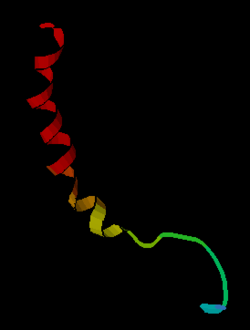
Neuropeptide Y - protein involves in regulating food intake and physical activity.

Researchers at the university found out that rat group injected with the virus ate less as compared to the control group. The virus is said to interrupt/attack/inhibit the process of Neuropeptide Y (NPY), an amino acid said to be responsible for energy regulation, learning and memory processing.

To make it even more surprising, the observation on the rat revealed that injected rat when given high calorie food, didn't convert them into white fat, but easy-to-burn brown fat instead. The virus is years from being able to be used on human though, but one can feel the ramification of this finding towards mankind.


Source: Here and here


p/s: i think the virus 'forced' the NPY to convert it to brown fat cause i don't think the virus is responsible for fat conversion. Well, it's just an opinion, i have no idea how it actually behaves though.

Harvesting energy from insects in quest to create tiny cyborg first responders

An insect fitted with piezoelectric generator to harness the energy from the insect's wing.
Insects have served as the inspiration for a number of Micro Air Vehicles (MAVs) that could be deployed to monitor hazardous situations without putting humans in harm's way. Now researchers at the University of Michigan College of Engineering are proposing using actual live insects enhanced with electronic sensors to achieve the same result. The insect cyborgs would use biological energy harvested from their body heat or movements to potentially power small sensors implanted on their bodies in order to gather vital information from hazardous environments.

To harvest energy from insects, the researchers have designed a spiral piezoelectric generator that converts the kinetic energy from the insect's wing movements into electricity. This power would be used to prolong the battery life of devices implanted on the insect, such as a small camera, a microphone or a gas sensor. The prototype piezoelectric generator was fabricated from bulk piezoelectric substrates and was designed to maximize the power output in a limited area.

"Through energy scavenging, we could potentially power cameras, microphones and other sensors and communications equipment that an insect could carry aboard a tiny backpack," said Professor Khalil Najafi, the chair of electrical and computer engineering at the U-M College of Engineering. "We could then send these 'bugged' bugs into dangerous or enclosed environments where we would not want humans to go."

The U-M team examined several techniques to scavenge energy from wing motion with their results were published in a paper titled "Energy scavenging from insect flight," which was recently published in the Journal of Micromechanics and Microengineering. The university is now pursuing a patent for the technology and is seeking commercialization partners to bring it to market.

Getting the insects to go where their handlers want them to is another part of the puzzle that needs to be solved before insect cyborgs can be deployed. But DARPA has been working on this, having put out a call some years back for research proposals for Hybrid-Insects-Micro-Electro-Mechanical System (HI-MEMS) interfaces to control the movement of living insects. Combining the two technologies could be just the thing to take insect cyborgs to the next level and see them used to monitor hazardous situations in the not to distant future.


sources : http://www.gizmag.com/insect-cyborgs/20596/


No 'Blind Spot' Side Mirror

Dr R. Andrew Hicks, a math professor at Drexel University has successfully eliminates 'blind spot' in current design of side mirror by introducing a curved side mirror. Normal side mirror is often flat, giving you around 17 degrees field of view. This revolutionize side mirror, on the other hand, can give you field of view around 45 degrees, allowing you to see more as compared to flat side mirror.

The curvy side mirror might gave you a wider field of view but the visual distortion on the mirror which can make straight line looks curvy presents with great risks, hence no car companies want to try and use it. But Dr Hicks invention on the other hand is created with mathematical algorithm so that the visual distortion is minimized and in his invention, the curvy straight line is barely detectable, suggesting low visual distortion, but still, object appears in a distance when in reality it is much closer.

In the curvy mirror above, the silver car is seen at a distance but is much closer in reality. However,
the field of view in above mirror allows driver to see details that aren't present in flat mirror.
The metaphor given by Dr Hicks to his invention is like disco balls bouncing off light. We can imagine the mirror's surface is created with thousands of smaller mirrors and the algorithm will manipulate each of these smaller mirrors' direction so that the resulting big mirror will give wider view to the driver without distorting the visual appearance on the mirror.

His invention though great, but it won't be installed in any new car soon because of US regulations that a car must have flat side mirror or a phrase 'Objects in mirror are closer than they appear' must be included for curve mirror. Nevertheless, this is a good invention to eliminate the high statistics of vehicle accidents in the whole wide world. Dr Andrew Hicks also have designed several bizarre mirrors. You can check it out here.

Source: Here

Eidetic Memory

Eidetic comes from Greed word eidos which means "seen". Eidetic memory means the ability to recall any visual/audio events with perfect accuracy and details. People who claim to have this kind of memory possess the skills to exactly remember an event, for example the event in a ball room, where he/she can recall where the person was standing, the people around him/her, the shirt they were wearing, food they ate down to what kind of conversation that they were having.

There are several series depicting a genius with this kind of memory for example Dr Spencer Reid in Criminal Minds and Dr Sheldon Cooper in The Big Bang Theory. In real life however, the case of eidetic memory have yet to be understood fully but there are a few who claim to have this memory for example Stephen Wiltshire, a British architectural artist that can draw a landscape after seeing it once. Another person, Daniel Tammet, also a British citizen, who can recall the number pi up to 22 000 digits.

Dr Spencer Reid holds Ph.D in Math, Chemistry and Engineering
as well as B.A. in Philosophy.
Dr Sheldon Cooper portrayed by Jim Parsons in The Big
Bang Theory.
Psychologically, people who have eidetic memory sometimes suffer from a condition known as autism, a medical condition characterized by problems in social interaction and communication together with repetitive behavior. Generally, people who have eidetic memory suffer also with autism but people who suffer from autism may not have eidetic memory.

The video is a documentary about Daniel Tammet

There are several myths involving photographic memory especially as to whether normal people can acquire it or not. Most of the techniques that claim to help you acquire this memory are actually memory improvement technique, not the actual eidetic memory. Nevertheless, it is always good to improve your memory as it may helps you from time to time.

Source: here and if you like to read about some of the myths, you can go here.

How The Universe Was Measured

In space exploration, there are terms where researchers use in order to determine the distance of a star from earth. The two most common terms are astronomical unit, which is equivalent to approximately 150 million kilometers or the mean distance from earth to sun, and the other unit is light year, which is the distance of light travel by a year or 9.5*10^13 kilometers.

The video below shows how the distance of two stars between universe is measured. The video used only simple terms and people with no scientific background can also understand this. Give it a whirl.


There might be several terms such as Parallax, Standard Candle or Doppler effect which you might want to Google in order to understand the video better. Kudos to whoever involves in creating this wonderful video. 

Source: Here

Blue Strawberry

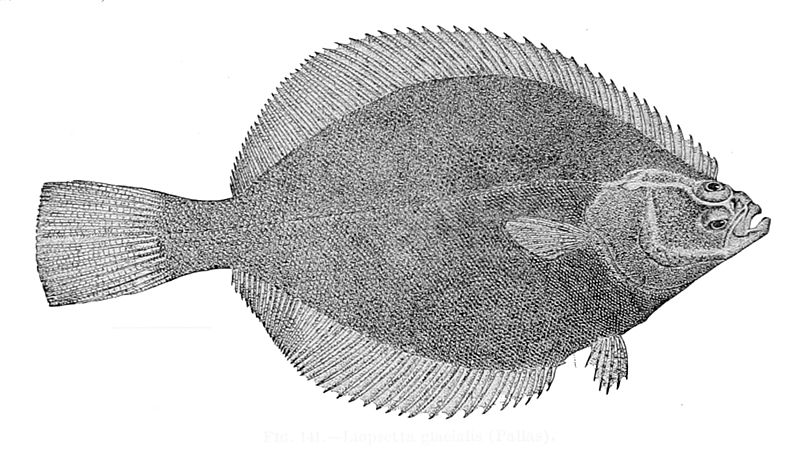
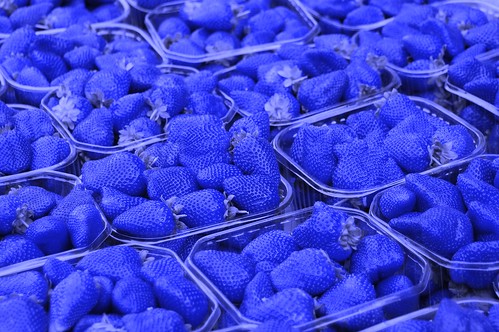
Blue strawberry is now available in real life. Scientists have try to come up with a way for strawberry to not degrade after being left in a freezer. While doing their research, the group of scientists discover an anti-freezing gene in Arctic Flounder Fish and use that to genetically modify the strawberry.

The Arctic Flounder Fish

Some concerns regarding this genetically modified strawberry are raised including the nutritional content and allergy. As for now, researchers created the blue strawberry for the purpose of research, not for production. So, for anti-GMO out there, just don't go on a demo just yet.


Source: Here and here.


p/s: Somehow i wonder why they change red to blue. Last time there was an announcement saying that blue roses are now available and now, the strawberries. 

Arecibo Message

The search for extraterrestrial life began long time ago but it may be due to some conspiracy that we don't know, the existence of this life has not been proved yet. Nevertheless, human keep sending message in the form of radio waves to see whether an outer space life can detect and decode it or not.

The above picture isn't just a picture, but rather a message that was broadcasted from Arecibo radio telescope towards M13, a globular star cluster located 25 000 light years away. Scientists predict that Earth has to wait for 50 000 years for the reply.

The message was created by Dr Frank Drake, the creator of Drake Equation with the help of few other people including Carl Sagan, an American astronomer. The message consists of seven parts which generally explain about life on Earth.

The parts are:

  1. The numbers 1 through 10. (white)
  2. Atomic number of Hydrogen, Carbon, Nitrogen, Oxygen and Phosphorus, the elements that make up Deoxyrebonucleic Acid. (purple)
  3. The formula for sugars and bases in nucleotides of DNA. (green)
  4. Number of nucleotides (green) and the basic double helix structure of DNA. (blue)
  5. Graphic figure of human, dimension of the average man and human population on Earth in 1974. (red)
  6. Graphic of the solar system. (yellow)
  7. Graphic of Arecibo radio telescope and the dimension of the transmitting antenna dish. (bottom purple)
The message was encoded in binary in which it must be arranged in 73 rows and 23 columns for the string to make any sense. The binary string is as follows.

00000010101010000000000
00101000001010000000100
10001000100010010110010
10101010101010100100100
00000000000000000000000
00000000000011000000000
00000000001101000000000
00000000001101000000000
00000000010101000000000
00000000011111000000000
00000000000000000000000
11000011100011000011000
10000000000000110010000
11010001100011000011010
11111011111011111011111
00000000000000000000000
00010000000000000000010
00000000000000000000000
00001000000000000000001
11111000000000000011111
00000000000000000000000
11000011000011100011000
10000000100000000010000
11010000110001110011010
11111011111011111011111
00000000000000000000000
00010000001100000000010
00000000001100000000000
00001000001100000000001
11111000001100000011111
00000000001100000000000
00100000000100000000100
00010000001100000001000
00001100001100000010000
00000011000100001100000
00000000001100110000000
00000011000100001100000
00001100001100000010000
00010000001000000001000
00100000001100000000100
01000000001100000000100
01000000000100000001000
00100000001000000010000
00010000000000001100000
00001100000000110000000
00100011101011000000000
00100000001000000000000
00100000111110000000000
00100001011101001011011
00000010011100100111111
10111000011100000110111
00000000010100000111011
00100000010100000111111
00100000010100000110000
00100000110110000000000
00000000000000000000000
00111000001000000000000
00111010100010101010101
00111000000000101010100
00000000000000101000000
00000000111110000000000
00000011111111100000000
00001110000000111000000
00011000000000001100000
00110100000000010110000
01100110000000110011000
01000101000001010001000
01000100100010010001000
00000100010100010000000
00000100001000010000000
00000100000000010000000
00000001001010000000000
01111001111101001111000

The message was sent with the aim of demonstrating the ability of arecibo radio telescope, not with the aim to find intelligent extraterrestrial life. Though, we'll never know what will happen in the next 50 000 years, could we?

Source: Wiki.

3D Printing: Human Organs and Chocolate

A long time ago i posted something about 3D Printer. But the world does not stop at just that. Now, with time, 3D printing is advancing towards medical and food industry. 

The success story of printing body parts:

Organovo, a company pioneering in bioprinting technology has successfully created the first commercial organ printer in the world. The printer, called NovoGen MMX Bioprinter, is now capable of producing arteries which is commonly used by surgeons to do bypass surgery. By using the patient's own cell, the threat of rejection by organ transplant is greatly reduced. The company hopes that the machine will be able to print more complex organ such as heart and liver in the next 10 years. With capabilities to save thousands of lives that need organ transplants, NovoGen can be considered as the latest breakthrough in the world of medicine. 
Roadmap to bioprinting
Watch the video of the printer. 


Chocolate Printing:

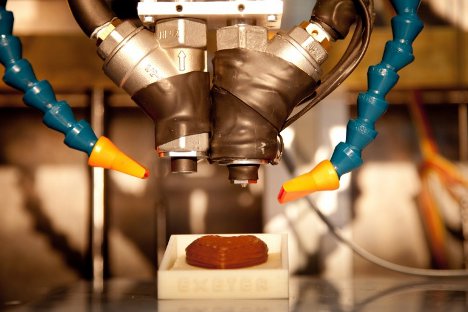
Engineering and Physical Science Research Council (EPSRC) is now researching the 3D printer so that it can print custom design chocolate. This printer will allow user to design his/her own chocolate and bring it to reality. The challenge in creating this printer is to melt and temper the chocolate at the right temperature but it is one challenge that can be overcome. With the 3D printing technology becoming more and more commercially available, this research can help in revolutionizing the business of manufacturing process worldwide. 


Source: Here and here.

Albino-like Penguin

From National Geographic, tourists found an albino-like penguin which is believed to be the case of rare genetic mutation. 


Penguin expert, P. Dee Boersma said the bird actually suffers from isabellinism, a genetic condition that dilutes pigment in penguins' feathers resulting in lightening of bird's dark color, turning it into pale brown or "blonde" penguin.

This genetic condition may affect the penguins' survival as penguins often used their black back in order to camouflage themselves from predator and prey, though no study has yet been done on this subject matter.

In case if you don't know how original penguins look like. 
Normal penguin VS Albino-like penguin
   
Genetic mutation in other animals
Source: Here

Worldwide LHC Computing Grid


A considerable amount of people of Earth somewhat have heard about the Large Hadron Collider which is presently located in Cern, Geneva. Although the existence of such massive scientifically significant mega structure is known by a lot of people, very few are aware of one question :
If the Large Hadron Collider is collecting a lot of data for better understanding physics, what kind of supercomputer is managing the data?

The answer to that question resides in grid computing. Grid computing is unlike super computer.They are super virtual computer. A supercomputer are resources such as computers or processors connected via high speed system bus whereas super virtual computer are connected via high speed networks.

What is the Worldwide LHC Computing Grid?


The Worldwide LHC Computing Grid (WLCG) is a distributed computing infrastructure to provide the production and analysis environments for the LHC experiments.

It is managed and operated by a worldwide collaboration between the experiments and the participating computer centres. The resources are distributed across the world for funding and sociological reasons.

WLCG is therefore a distributed, or grid-based, infrastructure - the most effective solution for meeting the data analysis challenge on this unprecedented scale.

Currently WLCG is made up of more than 140 computing centers in 35 countries to process, analyze and store data produced from the LHC, making it equally available to all partners, regardless of their physical location.

Tiers

The WLCG is composed of four levels, or “Tiers”, which are made up of the computer centres. The tiers are called Tier 0, Tier 1, Tier 2 and Tier 3. These tier sites process, store and analyse all the LHC data between them.

Components

Massive multi-petabyte storage systems and computing clusters with thousands of nodes connected by high-speed networks are the building blocks of the WLCG centres.

Data processing

The challenge of analysing the volume of data produced at the LHC is an immense task. Two-stage processing using dedicated algorithms are in continuous development to reduce data 'noise', and assist in focusing on the most important data which could bring new physics discoveries.


Sadly, not enough info for the supercollider's super virtual computer since it is kept secret so that other competing organizations may reproduce such a scientific marvel but recently, the supercollider's committee decided to ask for public help to connect their pc's to the grid for extra resources. You can find the article here.

Sources : http://en.wikipedia.org/wiki/Grid_computing

AES Encryption


Ok guys, its been awhile since I last posted anything here but to avoid any nagging from admin I decided to up the ante for my next post. Here for all who is interested about encryption and computer security, a brief explanation about one of the basic encryption algorithm that all of them whom call themselves |-|4xx0|2 (if you don't what is this go learn about 1337). AES is simple in terms of implementation but complex in terms of production. Both simplicity and complexity is one the requirements for the AES when it was first proposed. I have to warn you th at this kind of stuff is not for the weak hearted and mind (seriously). This is a very complex thing but I know some people would have no trouble understanding.

The Advanced Encryption Standard (AES) is an encryption algorithm for securing sensitive but unclassified material by U.S. Government agencies and, as a likely consequence, may eventually become the de facto encryption standard for commercial transactions in the private sector. (Encryption for the US military and other classified communications is handled by separate, secret algorithms.)
In January of 1997, a process was initiated by the National Institute of Standards and Technology (NIST), a unit of the U.S. Commerce Department, to find a more robust replacement for the Data Encryption Standard (DES) and to a lesser degree Triple DES. The specification called for a symmetric algorithm (same key for encryption and decryption) using block encryption (see block cipher) of 128 bits in size, supporting key sizes of 128, 192 and 256 bits, as a minimum. The algorithm was required to be royalty-free for use worldwide and offer security of a sufficient level to protect data for the next 20 to 30 years. It was to be easy to implement in hardware and software, as well as in restricted environments (for example, in a smart card) and offer good defenses against various attack techniques.
The entire selection process was fully open to public scrutiny and comment, it being decided that full visibility would ensure the best possible analysis of the designs. In 1998, the NIST selected 15 candidates for the AES, which were then subject to preliminary analysis by the world cryptographic community, including the National Security Agency. On the basis of this, in August 1999, NIST selected five algorithms for more extensive analysis. These were:
  • MARS, submitted by a large team from IBM Research
  • RC6, submitted by RSA Security
  • Rijndael, submitted by two Belgian cryptographers, Joan Daemen and Vincent Rijmen
  • Serpent, submitted by Ross Andersen, Eli Biham and Lars Knudsen
  • Twofish, submitted by a large team of researchers including Counterpane's respected cryptographer, Bruce Schneier
Implementations of all of the above were tested extensively in ANSI C and Javalanguages for speed and reliability in such measures as encryption and decryption speeds, key and algorithm set-up time and resistance to various attacks, both in hardware- and software-centric systems. Once again, detailed analysis was provided by the global cryptographic community (including some teams trying to break their own submissions). The end result was that on October 2, 2000, NIST announced thatRijndael had been selected as the proposed standard. On December 6, 2001, the Secretary of Commerce officially approved Federal Information Processing Standard (FIPS) 197, which specifies that all sensitive, unclassified documents will use Rijndael as the Advanced Encryption Standard.
The Advanced Encryption Standard (Rijndael)
The block cipher Rijndael is designed to use only simple whole-byte operations. Also, it provides extra flexibility over that required of an AES candidate, in that both the key size and the block size may be chosen to be any of 128, 192, or 256 bits. (During an early stage of the AES process, a draft version of the requirements would have required each algorithm to have three versions, with both the key and block sizes equal to each of 128, 192, and 256 bits. This was later changed to make the three required versions have those three key sizes, but only a block size of 128 bits, which is more easily accomodated by many types of block cipher design.)
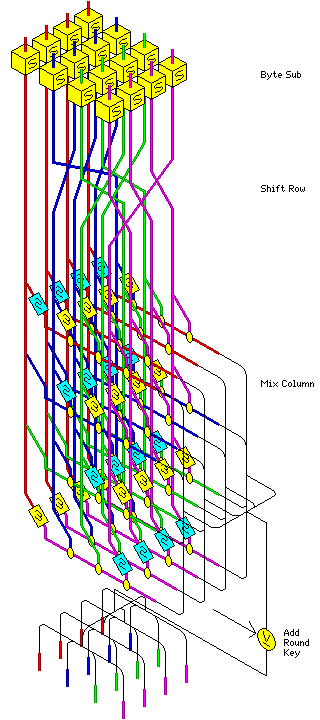
The original description of Rijndael is available at: http://www.esat.kuleuven.ac.be/~rijmen/rijndael/.

However, the variations of Rijndael which act on larger block sizes apparently will not be included in the actual standard, on the basis that the cryptanalytic study of Rijndael during the standards process primarily focused on the version with the 128-bit block size.
Rijndael is a relatively simple cipher in many respects.
Rijndael has a variable number of rounds. Not counting an extra round performed at the end of encipherment with one step omitted, the number of rounds in Rijndael is:
  • 9 if both the block and the key are 128 bits long.
  • 11 if either the block or the key is 192 bits long, and neither of them is longer than that.
  • 13 if either the block or the key is 256 bits long.
To encipher a block of data in Rijndael, you first perform an Add Round Key step (XORing a subkey with the block) by itself, the regular rounds noted above, and as already noted, the final round with the Mix Column step, as described below, omitted.

Now that you know a bit about this type of encryption, here is an example of what the encryption looks like kinda. You can download a pdf from:


Direct Download Skills

Imagine if there is a way to learn new things by directly download the new things into your brain.

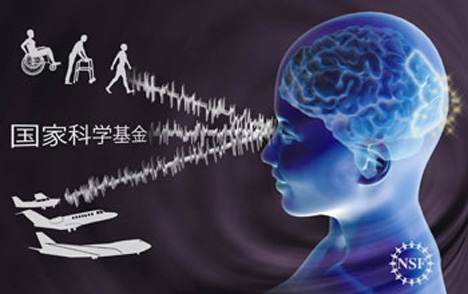
Recently, experiment conducted by Boston University and ATR Computational Neuroscience Laboratory in Kyoto, Japan, has successfully demonstrated through stimulation on a person's visual cortex, one would be able to improve his/her own performance on visual tasks.


The researchers used decoded functional magnetic resonance imaging in order to induce a brain activity pattern from a previously determine state in a person. The method is believed can be used in inserting new knowledge through the visual cortex, eliminating the need for practice and hardwork.


Below is some description about this experiment according to NSF. Read full NSF press conference about this project here.

"Think of a person watching a computer screen and having his or her brain patterns modified to match those of a high-performing athlete or modified to recuperate from an accident or disease. Though preliminary, researchers say such possibilities may exist in the future.

Neuroscientists have found that pictures gradually build up inside a person's brain, appearing first as lines, edges, shapes, colors and motion in early visual areas. The brain then fills in greater detail to make a red ball appear as a red ball, for example."


In the press conference, Watanabe, one of the co-founder in this project said;

"The most surprising thing in this study is that mere inductions of neural activation patterns corresponding to a specific visual feature led to visual performance improvement on the visual feature, without presenting the feature or subjects' awareness of what was to be learned."

Though the project still has few limitations, this undoubtedly allows a new method of learning which can be beneficial for all mankind. Imagine having able to learn about stuff by just connecting yourself to a computer. Much like this:


I sincerely hope this i could get my hands on being the subject for this. Nevertheless, hopefully the project can give a lot of benefit to people with problem in studying. 

Source: Here