Multiple Intelligences

Howard Gardner in his book, Frames of Mind (1983),  said that intelligence is not a single unit. His theory proposed Eight distinct,relatively independant intelligence

In this theory, there can be more than eight intelligence actually, but this eight is the most common intelligence that we can see. What more important is as a human, we have all this intelligence but not all of them develop equally. That is why we have a few intelligence which is more dominant than the others.


Howard Gardner's Multiple Intelligences


  1. Verbal/Linguistic- Sensitive towards language, meanings of a word, relationship among words. This intelligence is associated with the ability to speak, write, reading and listening very well. Novelist, poet, copywriter, editor and public relation officer often has this type of intelligence
  2. Logical/Mathematical-Abstract thought, precision, counting, organizing, logical structure. This type of intelligence display an aptitude for numbers, reasoning and problem solving. We can see this type of intelligence in mathematician, scientist, engineer and accountant
  3. Visual/Spatial-Very keen observation, visual thinking, mental images, sense of gestalt, metaphor. Person who has this type of intelligence also enjoy maps, charts, graphs, tables, illustrations, arts, puzzles-anything eye catching. Architects, painters, naturalists or theoritical physicist usually have this kind of intelligence.
  4. Musical/Ryhtmic-Sensitive to pitch, ryhtm, timbre, emotional power, complex organization. Associated with ability to learn well through songs, patterns, rythms, instrument and musical expressions. Performer, composer, conductor, recording engineer and those who create musical instrument possess this intelligence
  5. Body/Kinesthetic-Control of one's body, timing and trained responses. Person who has this type of intelligence learn best through activity such as games, movement and hand on tasks. Athlete, dancer and surgeon are among the one who have this intelligence
  6. Naturalist-Love the outdoors, animals, field trips. More than this, the person who has this intelligence love to pick up subtle differences in meaning. The traditional classroom environment has not been accomodating to these people. Animal doctors and environmental activist do possess this intelligence.
  7. Interpersonal-Has high level of sensitivity towards others, and always consider others. Noticeable in people who do their learning cooperatively in groups or with a partner. Teacher, politician, religious leader and counselor are among the people who has this intelligence
  8. Intrapersonal-Developed sense of self. Novelist, wise elder and philosopher are among those who possess this intelligence.

    In most cases, people will only developed either two or three intelligences which means they can excel in certain aspects of their life. With practice we can develop the intelligence that we're weak at. The question now is do you prefer to be King that excels in one aspect or to be the Jack of all Trades? 

Tetris

Is Tetris good for the brain?

*An article taken from here.

Researchers from Mind Research Network in Albuquerque used brain imaging and Tetris to investigate whether practice makes the brain efficient because it increases gray matter. For 30 minutes a day over a three-month period, 26 adolescent girls played Tetris, a computer game requiring a combination of cognitive skills. The girls completed both structural and functional MRI scans before and after the three-month practice period, as did girls in the control group who did not play Tetris. A structural MRI was used to assess cortical thickness, and a functional MRI was used to assess efficient activity.


The girls who practiced showed greater brain efficiency, consistent with earlier studies. Compared to controls, the girls that practiced also had a thicker cortex, but not in the same brain areas where efficiency occurred.

The areas of the brain that showed relatively thicker cortex were the Brodmann Area (BA) 6 in the left frontal lobe and BA 22 and BA 38 in the left temporal lobe. Scientists believe BA 6 plays a role in the planning of complex, coordinated movements. BA 22 and BA 38 are believed to be the part of the brain active in multisensory integration—or our brain’s coordination of visual, tactile, auditory, and internal physiological information. Functional MRI (fMRI) showed greater efficiency after practice mostly in the right frontal and parietal lobes including BAs 32, 6, 8, 9, 46 and BA 40. These areas are associated with critical thinking, reasoning, and language and processing.

“One of the most surprising findings of brain research in the last five years was that juggling practice increased gray matter in the motor areas of the brain,” said Dr. Rex Jung, a co-investigator on the Tetris study and a clinical neuropsychologist. “We did our Tetris study to see if mental practice increased cortical thickness, a sign of more gray matter. If it did, it could be an explanation for why previous studies have shown that mental practice increases brain efficiency. More gray matter in an area could mean that the area would not need to work as hard during Tetris play.”

“We were excited to see cortical thickness differences between the girls that practiced Tetris and those that did not,” said Dr. Richard Haier, a co-investigator in the study and lead author of a 1992 study that found practicing Tetris led to greater brain efficiency. “But, it was surprising that these changes were not where we saw more efficiency. How a thicker cortex and increased brain efficiency are related remains a mystery.”

The researchers hope to continue this work with larger, more diverse samples to investigate whether the brain changes we measured revert back when subjects stop playing Tetris. Similarly, they are interested if the skills learned in Tetris, and the associated brain changes, transfer to other cognitive areas such as working memory, processing speed, or spatial reasoning.

More information: MRI assessment of cortical thickness and functional activity changes in adolescent girls following three months of practice on a visual-spatial task; Richard J Haier, Sherif Karama, Leonard Leyba and Rex E Jung; BMC Research Notes 2009, 2:174;

Matlab Project Underway


I'm currently making a complex mathematical function using Matlab GUIDE. The calculation is about fluid substitution in which the velocity of a seismic wave will differ with varying porosity and fluid saturation. Given a massive amount of data, i try to create a GUI that will read the data, perform the fluid substitution and write the data into new file. This may take a few weeks to be completed but i'll try to fill the blog with new things every now and then. Until then, keep waiting!!

Circadian Rhythm and Sleep

In our body, there exists a series of processes that occur at specific time and interval. These processes are mainly being affected by what is called Circadian rhythm. It refers to the recurrences of a specific process for example, eating and sleeping in a cycle of 24 hours. It can also be defined as the internal biological clock that helps us in regulating the processes that occur in our body.

Now, what can this circadian rhythm do? Well, for starters, it regulates your body and tell your body when to eat, sleep, even up to regular bowel movement. The discussion about circadian rhythm is very broad but here i'll only look at it in term of how it affects our sleep.


Well, as i mentioned earlier, circadian rhythm can affect our sleep very much. You can read about sleep here. The circadian rhythm is used to control when your body will go to sleep. By when, it is not the time concern but rather the condition in which our body is being exposed to. To put it simply, our body reacts with the illumination of light, the body condition, the environment and etc in order to put us to sleep. 

Normal people, they wake up in the morning and goes to sleep at night. Let's say that the usual time for people to sleep is at 11 pm and wake up at 6.30 am. Now, if the process continues for almost everyday, our body will get accustomed to it and after some time, we can even wake up without having to use the alarm. The role of circadian rhythm here is to tell your body when to sleep, in this case 11 pm and when to wake up. By adjusting the body to react with 11 pm condition, we are able to sleep on time and wake up at the desired time. 

What about nocturnal people? The process is the same. Let's say that this group sleeps at 5.30 am and wake up at 1.00 pm. The circadian rhythm will adjusts the body so that it tells your body when to sleep when the condition of 5.30 am is met. This is why nocturnal people have trouble to sleep early because the condition is not right for them to sleep. 

In both of the cases, even if they change the sleeping behavior say for the normal group they sleep late and the nocturnal group sleep early. They will wake up at the usual time in this case at 6.30 am and 1.00 pm. This is because the body did not yet receive a message to wake up as the condition was not met. The circadian rhythm as i told earlier depends on the external stimuli such as light, sound or temperature. Everyone may vary in term of the external stimuli but most of the people respond the the light when it is switched on, sound when there's alarm or temperature when your a/c or fan does not work. 

During a different weather condition for example, rainy day. The light is not so much, the sound if there's no thunder will be quite low and the temperature is just nice. This condition may be similar to when you want to sleep at 10.00 pm or 11.00 pm. Because of the same condition, you'll tend to feel sleepy and some might overslept or wake up early depending on the weather condition. Even if you sleep at night, and the night was scorching hot like it was during the day, you will not be able to sleep. That's how much circadian rhythm can affect us. 


For student, a good night sleep is important for us in order to get a good day. But i believe, most of the students are nocturnal. That is why they got some problem when the class starts at 8.00 am. The only way you can change this is by forcing your circadian rhythm to change. Force yourself to sleep early for example at 11 pm. Yeah, i know you'll only doodle around your bed because you can't sleep yet but make sure you must not open your eyes and do some other things besides lying in bed. A nocturnal also tends to wake up late and to change this, use alarms. *Note the (s)* . This is in order to disrupt the condition and force the brain to signal the body to wake up as the condition is now different. 


Rule of thumb will tell you to keep this condition for 21 days and eventually you'll become a morning person. It may seems hard a little but keep trying. Have your friends to force you to do this if you're willing to change. 

*The information is based on what i personally understands about circadian rhythm. If there's anything wrong, please tell me.
**The sleep pattern in here is monosomnia. The circadian rhythm works in different way in polysomnia pattern.

Codes That You're not Supposed to Know

Name Codes

Code Oscar: On a ship, a code oscar means someone has gone overboard. If the ship has to maneuver erratically to handle the situation, it must also send out blasts on the signal so that other ships nearby are aware of the fact that it is about to change its course. It should be noted that ships don’t have an internationally standardized set of PA signals and they can differ from place to place, but this is a fairly commonly used one.

Code delta: can mean that there is a biological hazard – though who knows what that might be on a passenger ship.

Code Alpha: often means “medical emergency”.

Code Adam: was invented by Walmart but it is now an internationally recognized alert. It means “missing child”. The code was first coined in 1994 in memory of Adam Walsh, a six-year old, who went missing in a Sears department store in Florida in 1981. Adam was later found murdered. The person making the announcement will state “we have a code Adam,” followed by a description of the missing child. As soon as the alert is heard, security staff will begin to monitor the doors and other exits. If the child is not found within 10 minutes, the police are alerted and a store search begins. Also, if the child is found in the first 10 minutes in the company of an unknown adult, the police must be called and the person detained if it is safe to do so.
Computer Support Codes

In computer support, a variety of codes can be used when referring to a customer
PEBKAC: Problem Exists Between Keyboard And Chair
PICNIC: Problem in chair – not in computer
ID 10 T Error: ID 10 T is, of course, IDIOT

Doctor Codes
Dr McNinja
“Doctor” codes are often used in hospital settings for announcements over a general loudspeaker or paging system that might cause panic or endanger a patient’s privacy. Most often, “Doctor” codes take the form of “Paging Dr. _____”, where the doctor’s “name” is a codeword for a dangerous situation or a patient in crisis.
Doctor Brown:  is a code word often used in hospitals to alert security staff to a threat to personnel. If a nurse or doctor is in danger from a violent patient or non-staff member, they can page Doctor Brown to their location and the security staff will rush to their aid. In some hospitals
Dr. Allcome: Serious emergency. “Doctor Allcome to Ward 5.” would indicate that all medical staff not presently occupied are needed. (The Med, Memphis Tennessee)
Dr. Firestone: Fire in the hospital. If a fire’s location can be isolated, the location of the fire is included in the page, e.g. “Paging Dr. Firestone to 3 West” indicates “Fire in or near west stairwell/wing on third floor” (William Beaumont Hospitals, Royal Oak and Troy, MI).
Dr. Pyro: Fire in the hospital/healthcare facility. “Paging Dr. Pyro on ____” indicates a fire and its origin or current location, e.g. “Paging Dr. Pyro on 3″ means “Fire on third floor” (Kaiser Permanente, system-wide).
Dr. Strong: Patient needing either physical assistance or physical restraint. “Paging Dr. Strong …” indicates that any physically capable personnel (orderlies, police or security officers, EMTs or firemen, etc.) in the proximity should report and be prepared either to move a patient who “fell down” and cannot get back up or to “capture and restrain” an uncooperative patient.


Color Codes


Code Black:
- In Australia code black is a personal threat. This incorporates a diverse range of situations including assaults, confrontations, hostage situations and threats of personal injury or attack
- Bomb Threat (Ontario, Manitoba)
- In the military code black is bomb threat or discovery of suspicious package.
Code Gray/Grey
- A combative person with no weapon under HASC suggestions.
- Severe Weather (Cook Children’s Medical Center, Fort Worth, TX)

Code Green
-A combative person using physical force, especially weapons. (some American hospitals)
-Used to indicate an evacuation situation, and can refer to the evacuation of a ward/floor/wing or the entire hospital (Code Green – Stat) depending on the call (Ontario Hospital Emergency Codes, Winnipeg Regional Health Authority)

Code Pink
- Biohazardous contamination of a patient or staff. (Heartland Regional Medical Center)
- Patient is under influence of illegal substances (UK First Aid organisations)

Code Purple
- Australian Standard for Bomb or Substance alert
- Hostage situation or patient abduction (Ontario Hospital Association)
- Emergency department can no longer accept patients; divert incoming cases to other hospitals if at all possible (Canada, also Wellstar Health Group)

Code Silver
- Combative person with a Lethal Weapon (HASC recommendations).
- Violent Situation – Lockdown (Cook Children’s Medical Center, Fort Worth, TX)

Code Yellow
- Missing patient (Ontario Hospital Emergency Codes).

Code Orange
- Used in Ontario hospitals to indicate an external disaster with mass casualties. Lockdown or controlled facility access is often used as part of the response. Volunteers, Families and Students were denied access during SARS Outbreak of 2003.

Code Brown
- Missing Adult (University of Toledo Medical Center) (University of Cincinnati Medical Center)

Source:http://www.uphaa.com/blog/index.php/secrect-code/ 

DIY Flame Ball

Hi. Today we're going to make a flame ball. If you already know how to make one, then i suggest you to move on from flame ball to flamethrower. Before you make this, make sure to have these stuff:


  1. 100% cotton cloth 
  2. Needle and cotton string
  3. Scissors
  4. Lighter fuel
  5. Bucket of water

How to create the flame ball.


  1. Cut the cotton cloth so that you have a 2'x5' dimension.
  2. Roll the cotton cloth until it form a ball shape.
  3. Use the cotton string and thread it to the needle. The length of the string depends on your ball dimension. In this case, 5 ft thread is more than enough.
  4. Poke the through the ball with the needle and roll all the string around the ball.
  5. After you finished rolling the string around the ball, poke the ball again with the needle so that the string will not untied. 
  6. Use the lighter fuel to soak the ball. Since the ball is made from cotton cloth, lighter fuel will easily be absorbed into the ball.
  7. Do not over fill it till it goes to your hands as the flame will light up your hands too.
  8. Use a lighter or a match to light your cotton ball. Make sure you touch only the blue flame part of the ball. Do not touch the yellow/orange part cause that is the part where it is hot. 
  9. Should anything goes bad, just put your hands and the cotton ball into the bucket of water. 
The flame ball will burned for quite a long time. The color of the cotton ball will turn darker (if you use white cotton cloth to make the ball, you'll see it) the more you use it. Have fun trying!

If you can't follow the instruction, simply watch this video. I used this video to make the instructions anyway.

10 Most Beautiful Buildings In The World


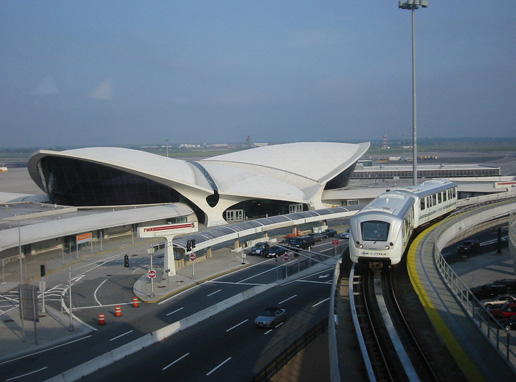
10. TWA FLIGHT CENTER, John F. Kennedy Airport, Queens, New York, US
most beautiful building 10th TWA Flight Center John F Kennedy airport Queens New York US Top 10 Most Beautiful Buildings in The World by 2011
9.  Wiblingen Abbey Library, Ulm, Badem-Wurttemberg Province, Germany
most beautiful building 9th Wiblingen Abbey Library Ulm Baden Wurttemberg Province Germany Top 10 Most Beautiful Buildings in The World by 2011
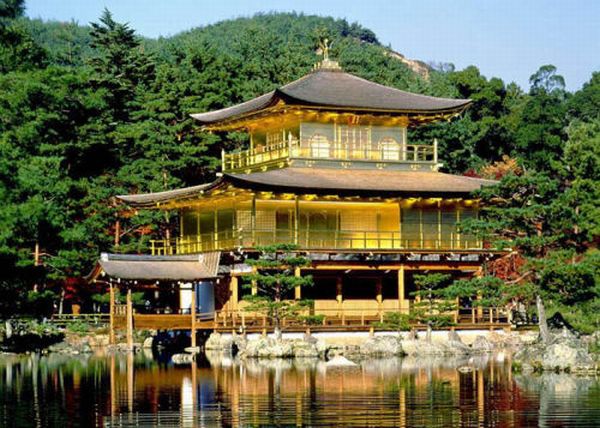
8.  Golden Pavilion, Kyoto, Honshu Island, Japan
most beautiful building 8th Golden Pavilion Kyoto honshu island Japan Top 10 Most Beautiful Buildings in The World by 2011
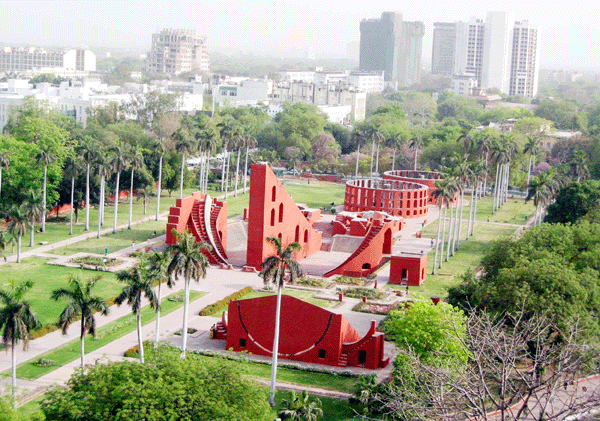
7.   Jantar Mantar, Jaipur, Rajasthan, India
most beautiful building 7th Jantar Mantar Jaipur Rajasthan India Top 10 Most Beautiful Buildings in The World by 2011
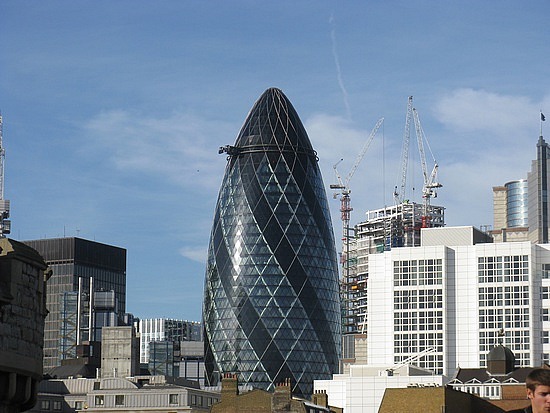
6.    30 St. Mary Axe, London, United Kingdom
most beautiful building 6th 30 St Mary Axe London United Kingdom Top 10 Most Beautiful Buildings in The World by 2011
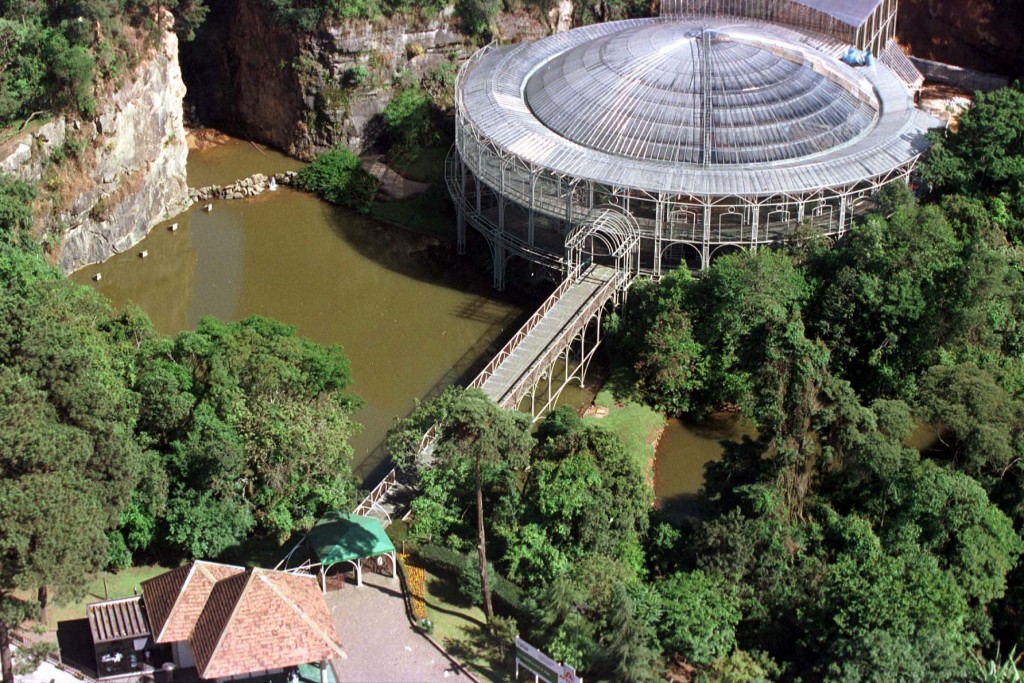
5.  Opera de Arame, Curitiba, Parama, Brazil
most beautiful building 5th Opera de Arame Curitiba Parana Brazil 1024x683 Top 10 Most Beautiful Buildings in The World by 2011
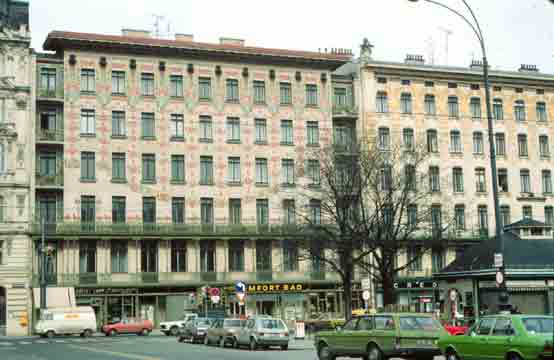
4. Majolica House, wina, Austra
most beautiful building 4th Majolica House Wina Austria Top 10 Most Beautiful Buildings in The World by 2011
3. Shwedagon Pagoda, Yangon, Myanmar
most beautiful building 3rd Shwedagon Pagoda Yangon Myanmar Top 10 Most Beautiful Buildings in The World by 2011
2.  Hoover Dam, Black Canyon, Colorado River, US
most beautiful building 2nd Hoover Dam Black Canyon Colorado River US Top 10 Most Beautiful Buildings in The World by 2011
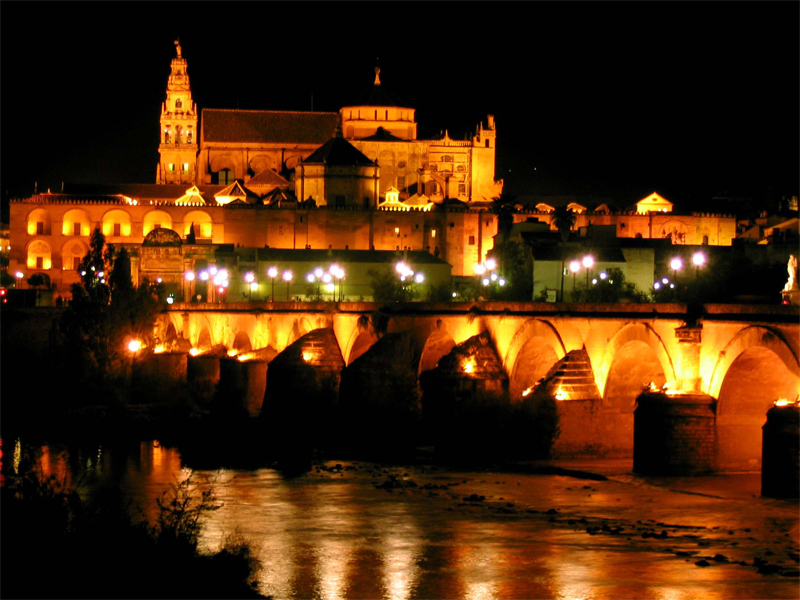
1.  Mequita de Cardoba, Kardoba, Spain
most beautiful building 1st Mezquita de Cordoba Kordoba Spain Top 10 Most Beautiful Buildings in The World by 2011
Source:
http://www.tiptoptens.com/2011/01/10/top-10-most-beautiful-buildings-in-the-world-by-2011/